AOTEAROA, Land of the Long White Cloud: A Tour of the Lakes


Looking north on Lake Rotoiti from Coldwater Hut.
 Nelson Lakes National Park is fabulous for car campers and lovers of water activities. The two picturesque lakes Rotorua and Rotoiti are surrounded by large mountains covered in dark beech forest and filled with birdsong, which is almost unusual in certain parts of NZ. *tears* Kiwi crossing signs abound and the Rotoiti feeds the Buller River, the most popular white water river in the South Island. The true lure of Nelson Lakes is the backcountry of course, but having made plans to hike the Great Walk the Heaphy Track, we were on a bit of a tight schedule.

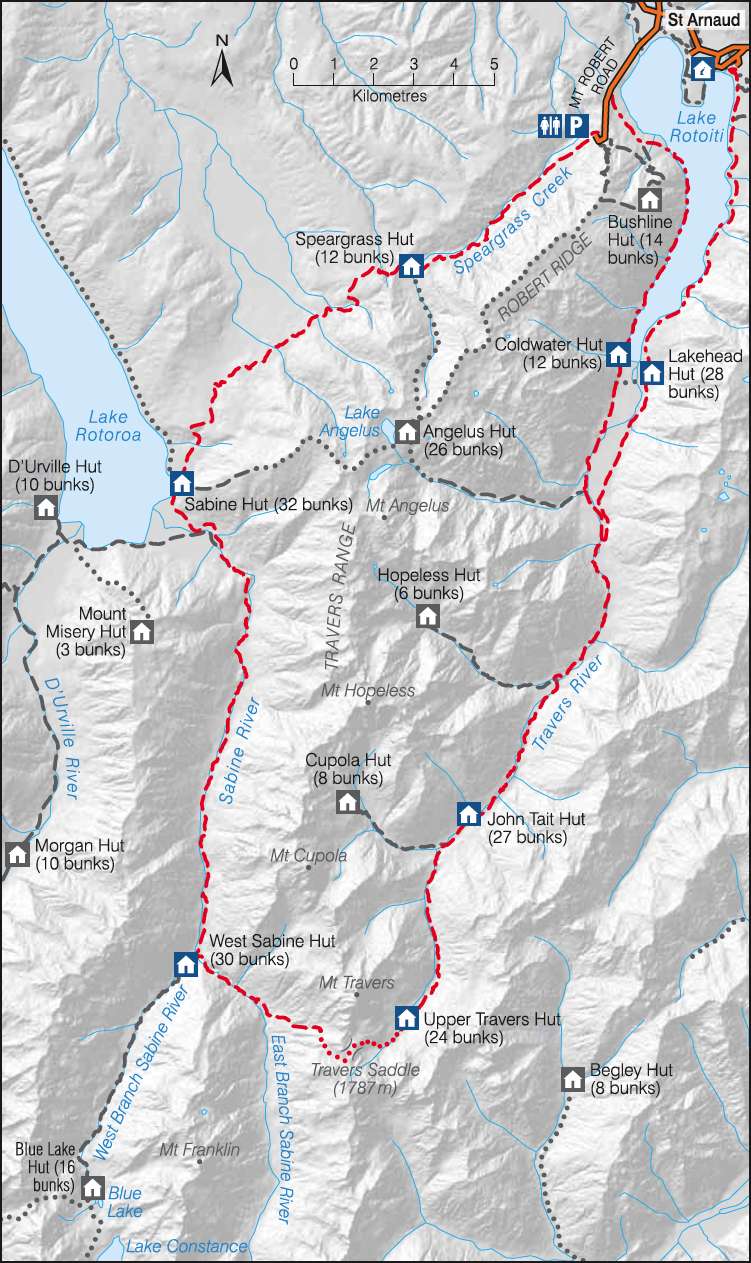
Our track, in the top right corner.


We determined that we had time for a three day, two night trek and decided to hit up the Angelus Hut and Robert Ridge. First day, we parked Sparky in the lot and began the easy Lakeside Track around Lake Rotoiti to Coldwater Hut. We arrived with plenty of daylight left and began hauling in a lot of brush for a fire. The hut faces the lake, and there were tons of Paradise ducks and gorgeous black swans with cygnets!

Whiskey Falls

LOOK AT THE BABIES! LOOK AT THEM!

SO VERY, VERY FUZZY!

Looking up the Travers River.

While we explored the area, a huge group of Kiwis showed up and started up the fire. They were kind of annoying because they didn't allow much space for us at either the table or the fire, and went off to shoot their rifle, which was loud and pointless. They were also rather awkward, so Captain and I just played cards the entire night. For dinner, we splurged and had burritos, with avocado, tomatoes, onions, the whole shebang and all of it fresh. After we gorged, we realized that we did not plan accordingly, and would not have enough food for the whole trip. Much chagrin was had.

Most impressive beech tree.

More birdies!

And now for some fog.
The next day we started early and began climbing in elevation to the Angelus Hut. The climb up was one of the most beautiful, due to the waterfalls, the pristine forest softly carpeted in beech leaves, and it was a clear, cold day. You go up the Hukere Stream on the Cascade Track, which ended up in a series of waterfalls falling from deliciously clear tarns.

One of the many falls along Hukere Creek.

Getting above the tree line.

I do love me some views!

A gorgeous series of waterfalls. I believe Hukere means Cascade.
Finally, after climbing with our hands, feet, and knees, we reached the top of the crest. Suddenly the clear day misted over and a bitter wind picked up. We kept walking and discovered Lake Angelus - small parts of it appeared for a second only to disappear in the fast moving clouds. After a few minutes, a blustery wind kicked the mist out, and one of the most beautiful scenes materialized before us. A calm tarn, surrounded by steep hills and low lying tuff emitted an aura of serenity - something that I'm always searching for.

Lake Angelus.
A few quick steps and we were at the cold Angelus Hut. Fitting 28 bunks, it was very spacious, which meant cold. We entered and grimaced at the lack of coal and wood - barely enough for a conservative fire. But you have to book Angelus Hut in advance, and it was a more expensive one. When we entered, we encountered another backpacker that we had met on our first tramp, the Rees-Dart. It turned out that this was her last tramp and she was heading back to Wisconsin. We exchanged info, since fate brought us together for our first and her last trip. Then we had a short discussion with the friendly warden, who informed us of gale-force winds, and no hope of wood resupply in the next couple days. We checked the map and determined that we could make it to the Bushline Hut over Robert Ridge, thereby avoiding getting stuck at Angelus, and insuring that we would make it out without starving overmuch. :)

"Far over the misty mountains cold..."
But that meant putting the backpacks back on and heading up the mountain to the ridge. The wind was fierce, but that meant that every once in awhile the mist would get lifted up and we could see the valleys. It was mesmerizing.

Captain leading the way!

Glorious views!
My knee was acting up again, so we took it slow. With relief, we finally made it to Bushline Hut, and met a rather entertaining family. With our usual dinner, we were soon fast asleep, or would be if THE SNORING WOULD STOP! The next day, we had no breakfast, but it only took about three hours to get back to Sparky, food, and civilization.

Lake Rotoiti!
My only regret is not being able to explore the Sabine-Travers wilderness. The problem with backpacking is that you want to keep going, keep exploring. What's beyond that hill, that mountain, the pass? No wilderness is big enough to hold back the spirit of exploration. Except maybe space. Space just might be big enough. But I can't explore it yet *tears*!
Cpt with a delicious peanut butter, nutella, and banana sandwich.

MUSSSSSHHHHROOOOOOOOOOM!

It's hard to photograph trees.


AOTEAROA: I Enjoy Long Walks on the Beach

Returning from the epic Clarence River adventure, we headed around the northern point of the South Island of New Zealand, straying a bit to investigate a sheepdog competition, staying a night in a woolshed, checking out Nelson (favorite city in NZ by far!) and Picton. If in Nelson, you MUST check out the wearable art museum! But on to the backpacking!

Meeting up with our French pal Hughes, we decided to do the easiest Great Walk out there - the Abel Tasman Coastal Track. Vibrant green rainforest, a multitude of ancient ferns, picturesque sandy white beaches, and the calm waters of the deep blue Tasman bay all add up to a great experience in Middle Earth.

If only all beaches were this beautiful and unoccupied.

A tree fern overlooks the Tasman Bay at Abel Tasman National Park.
 
However, if you're looking for quiet and solitude, this is not the place to be. Since it's the most accessible Great Walk, its paths are three feet wide and every inch is crawling with other tourists. It's almost amusing seeing how much people will stack in their bags. One French couple had a 12-pack of bottled beer and a bottle of wine. By the end of the day, they had only made it half-way to their planned destination. I hope they drank it all that night, just to save their backs.

Abel Tasman requires a certain amount of planning, due to inlets that you can only cross during low tides. When planning, you have to constantly look at the tide tables to make sure you don't have to wait too long. Only at two points, Awaroa and Onetahuiti, does the tide matter, because there are high tide tracks for all the other points. Also, you have to plan for a boat trip from Marahau out to where you want to start. Since we only had three days, two nights, we decided to get dropped off at Totaranui.

Gotta watch out for those tides!


After a nice tour boat ride, where we saw the split apple rock and baby seals galore and froze our butts off, we jumped from ship to sand and immediately headed onwards to the south. We quickly outpaced our fellow boat riders and headed up the hill. Views of the ocean were in order, and I enjoyed the variety; sun, rocks, and sand, to the darkness and greenery of the forest.

A fantail in the silver fern.


Fantails traced our wakes, chirping mightily and eating up the sandflies we stirred into a frenzy. When crossing the Awaroa inlet, I took off my shoes and socks, and enjoyed the sensation of mud between my toes. You get wet up to your thighs, even during the lowest tide, so make sure you have quick-dry pants. We camped that night under the stars at Tonga Quarry. The granite cut here built Nelson, and the same with the trees. Once the trees were all cut, they burned the forest to make farmland, but the clay would not cooperate, so it was turned back into forest, and then a national park.

Tonga Bay - Tonga Island and a full moon on the right.

I recommend camping the Abel Tasman, just to get some privacy and quiet since everyone else pays over fifty dollars for a night in the huts. The beach at Tonga was quiet and tranquil, Tonga Island made for a perfect shot with the moon overhead, and our beach fire (shhh! don't tell! totally illegal!) made for one of the most serene moments of my life.

Serenity Now!


Next day we started out slow, and my knee began acting up again. Even though we slowed down, we still outpaced most of the hikers. We sidetracked to check out Cleopatra's Pool, an angelic scene with a waterfall that makes one think it was by design. The view from the ridge was tremendous, and we saw a huge variety of waterfowl playing in the marshes near Torrent Bay Village.

It looks like a fun slide.

View from the Anchorage ridge.


That night we camped at Watering Cove and checked out the rocky shores. I love intertidal zone, filled with such curious creatures - mussels predominated here. The next day was a relatively short hike out and we were back in the real world. The trail got super crowded at the start, with day hikers checking the scene out.

This was completely filled up to the trees by high tide.

Do you see the elephant drinking?


The Great Walk was fun, and you can also kayak it, which I recommend, however, it's a little pricey just like all activities in NZ. The path is really well-maintained and the ocean views can't be beat! Also, stay at the Accents on the Park, it was a really adorable hostel and I almost made the whole building evacuate due to waaaay too much spice. My bad!

Check out that cutie!


Captain checking out the view.
All done!

AOTEAROA, Land of the Long White Cloud: Rafting the Clarence

We were taking a break from grape-picking in our beat-up, tiny-ass 1994 Mazda Familia when I noticed an old (80's) map that stated activities available in the region. We noticed the Clarence River was noted for rafting.  So it was decided to venture there after grape-picking was done.

We couldn't find any information at the library or online on the Clarence, but I google earth-mapped the river, and drew it by hand. We almost didn't have a map. Then, we left Blenheim and headed south down Route 1. Passing between the Kaikoura Range and the roaring Pacific, happy seals chilled on the beach. We parked the car about 5 miles from the end of the Clarence River. Then we hitched south, stopping to see big seals, and see them we did. Then we stopped at a waterfall and saw baby seals! The cuteness. It was...overpowering.

Between Kaikoura and the Pacific, lounge these enormous fur seals.

YAWN!

Cute starfish!

Baby seals playing in the water and sunlight.

Try and find all eight baby seals!

Baby seals playing in the waterfall.

After countless photos of ocean, rocks, and seals, we managed to get to Hamner Springs, (Par 3!). So we went to the water park there. Holy mother of god it was awesome. Two huge slides, and perfect, boiling-temperature water to bask in. It turned out to be a water week. The next morning we paid a Kiwi to drive us up to where the highest muster in the world is, the confluence of the Clarence and the Acheron. Gorgeous, vast meadows. We didn't put in until after two. I took a picture of the map at an excellent information bulletin. Thank god.


The extremely useful map of the Clarence. We started at the red dot on the bottom left.

Putting out, the earth was pasture and red clay. The water was clear as day. After two hours, it began to gorge, and I encountered my first white water alone. It was so much fun, but terrifying. Right as it was turning to dusk, I flipped my shit, and somehow grabbed my boat and my oar, and Captain's boat and towed us all to shore. So cold. So very cold. We ended up camping, but I was perfectly useless in setting up, and with packrafting there's quite a lot of setting up involved. My clothes were dry, thanks to dry sacks, but for some reason I left my coat off, and it got soaked without me using it.

The confluence of the Acheron and Clarence Rivers.

Captain and Charley.

Next day we started off early, and the entire day we were chased on shore by goats. My god I've never seen so many goats. The rapids were fun and then we stayed at Seymour Hut. It was salvation. We were surrounded by cows now. We set off at first light and then the river turned muddy, the gorges way more vertical. The big rapids started and they were a long, awesome, bumpy ride. We overshot a cabin and managed to get to the further one, Snowgrass Hut. I'm so glad we did. We were so concerned about timing, we only took one break to eat chocolate and an apple. Food good.

Wild goats!

The colors were so vivid!
Captain hurtling down a rapid, see the sheer cliffs?

The autumn colors were out in full force.

The last day was nine hours of rafting, and I ended up flipping on the last, ENORMOUS wave. I mean, I looked up and saw only wave. So I was once again cold and wet but we finished the Clarence Rafting run, me in a brain-dead mood. The ocean waves were so high, whipped up by some off-shore storm. The waves must have been 15 feet! Big waves are scary when you're on an island, no matter how big. We hiked out of a cow pasture on the true left of the river and managed to catch an ATV track pretty quick. We ended up back at Route 1 and hitched a ride from a Nissan salesman from Blenheim. We left his spotless car pretty muddy. Oops. Back in Blenheim, we rented a room, ate a pizza and passed out!

Me getting jostled about.

The misty mountains and Charley!

A couple days later we ran into a Kiwi at a sheepdog trial, who told us how he rafted the Clarence with a company. A strainer came up and he tried to kick the raft out of the way. Instead, the tree dislocated his leg from his hip! Thankfully, he made it out in time to make a full recovery at the hospital, but he had to go all the way to the ocean. Once you enter the gorges past the the third hut, there's no escape from the backcountry unless by miles on foot through bush, or by the river.

The Clarence was an awesome run, a little out of my skill level perhaps, since I flipped three times. I got blisters on my hands and certainly felt the arm muscles. It was a five day, four-night adventure and the beauty was overpowering. You can't appreciate the beauty and force of rivers until you are in or on the river, in the gorges, in the valleys. Tiny in comparison to the cliffs and the strength of the river, the landscape alone decides whether you survive or not. You have to fight for survival while still being powerless against the forces of nature. White water really teaches you that.

Shout out to the people (Olympus, Alpaca, Osprey, Sea to Summit, eVent) who made my equipment and the guy who loves me. Here's some more pics of the Clarence:
In the Snowgrass Hut, Captain drying himself off.

Paradise ducks!
Getting out of the gorge.

Geese heading north for the Southern Hemisphere's winter.